
Should You Install Vinyl Flooring Over Tile? Pro Guide 2026
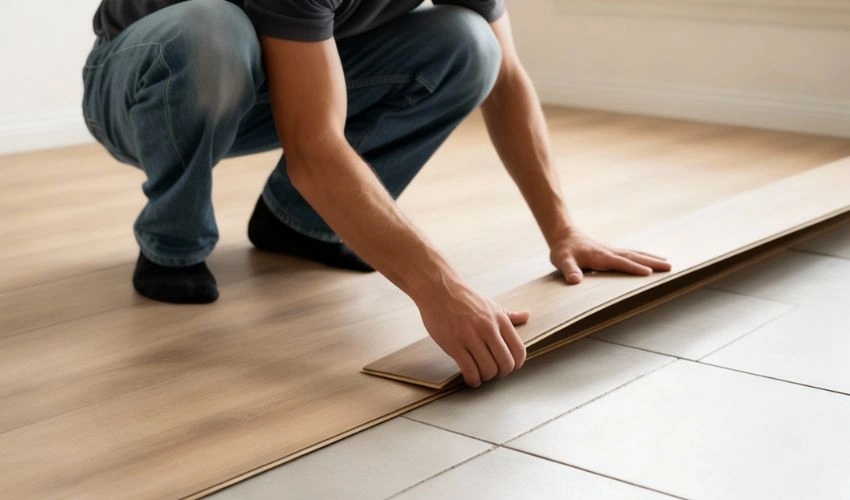
Surely, when you’re sick and tired of looking at the tiled floor of your home or apartment, you’ve already wondered whether it’s necessary to clear everything out. The short answer is yes. But you can install vinyl flooring UAE over tile; it’s the smarter, faster, and considerably cheaper route.
Through this process, you can get a new floor hassle-free without having to remove your previous flooring. By installing vinyl flooring in Dubai over existing tile, you not only get a fresh, updated design and shade, but you also save on costs.
In this blog, Flooring Shop, as a leading vinyl flooring supplier in Dubai, provides a thorough guide to installing vinyl flooring over your current floor without causing any damage.
Why This Decision Matters More
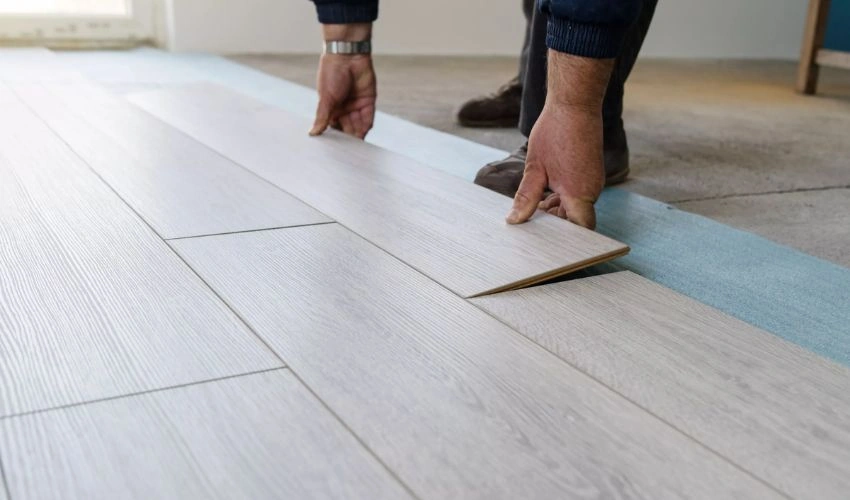
The houses and old apartment buildings that are scattered all around Dubai and Sharjah are usually built on concrete bases that swell and shrink more than one would anticipate due to expansion and contraction, not because of ground movements, but due to the continual struggle between the intense heat outside and the air conditioners inside.
It seems like a frequent issue when you are looking for cheap vinyl floors to refurbish your place before renting it out, when you are renovating your whole villa, or even just replacing worn-out tile.
Can You Really Install Vinyl Flooring Over Existing Tile?
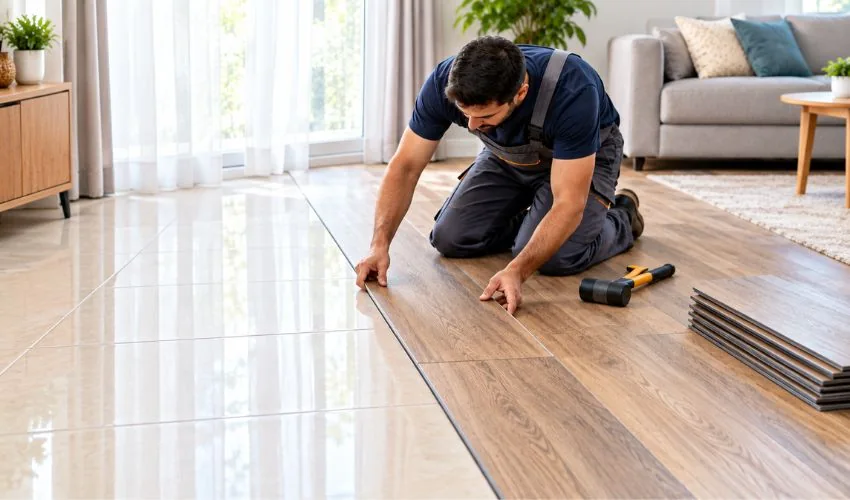
Yes, it is possible. Though it was not thought possible earlier, with new methods of installation, it is now easy to get a perfect job done when laying vinyl floor covering over tiles. With a few steps of preparation taken in advance, a good job can be done easily.
- Firmly bonded, with no widespread hollow or loose tiles
- Reasonably flat, without major lippage or dips
- Free of active moisture coming up from below
- Structurally stable, with no cracks suggesting slab movement
Which Type of Vinyl Actually Performs Best Over UAE Tile
Not every vinyl product handles a tile base in the same way, and choosing the wrong category is one of the most common and most expensive mistakes homeowners make.
Rigid-Core SPC or Stone Polymer Composite
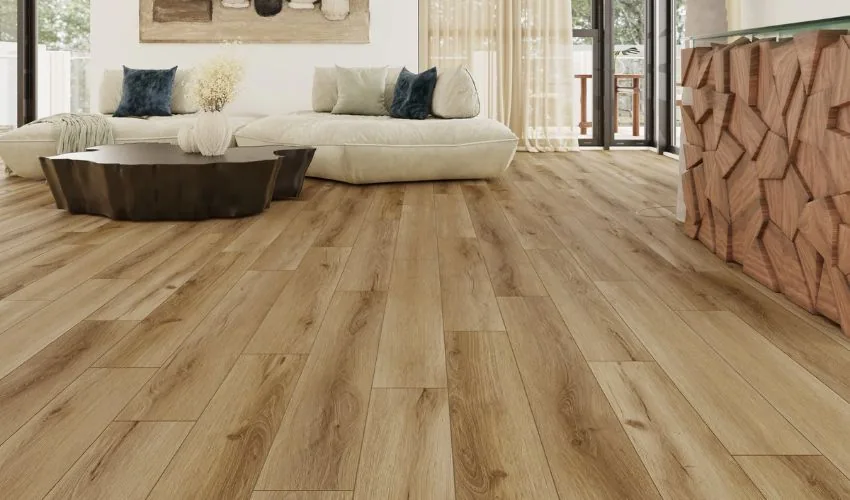
Generally, this type of floor tile is the safest and best-performing choice for local conditions. A thickness of five millimetres or more handles the daily heat cycling. WPC, or wood-polymer core, planks are a close second and are a genuinely good option, especially in bedrooms, since the softer core feels noticeably warmer underfoot than SPC while still bridging grout lines reasonably well, though it is slightly less resistant to dents from heavy furniture.
Vinyl Wood Flooring Dubai
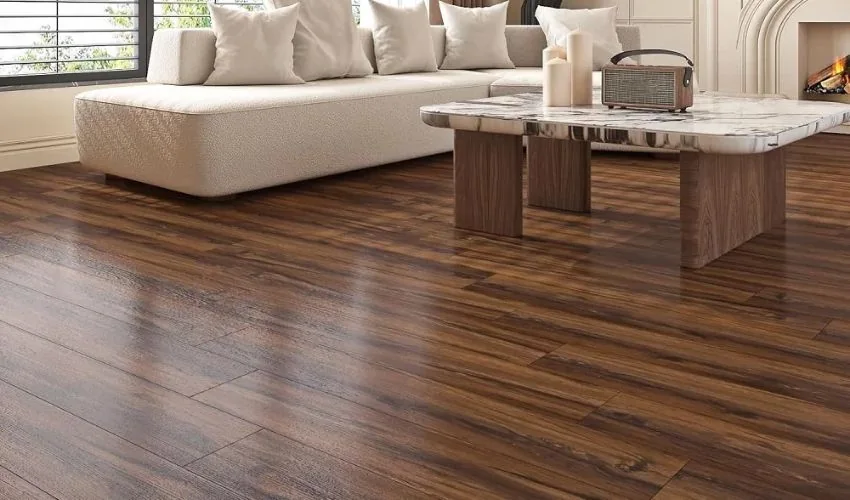
Buyers often gravitate toward flexible LVP planks for their realistic timber-look finish. These can absolutely work over tile, but they demand a flatter surface to start with, since a thinner, more flexible plank shows imperfections in the base far more readily than a rigid core does.
Glue Down LVT
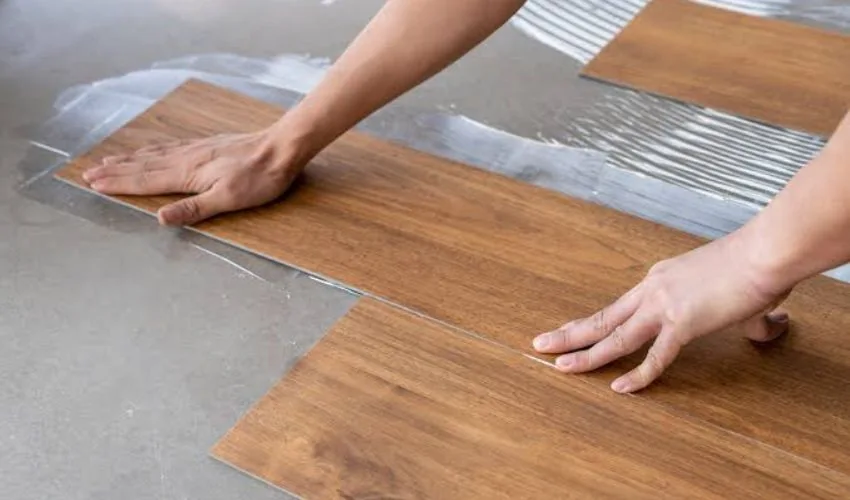
Glue down LVT can be laid on top of tiles as well, yet it involves certain limitations particular to this climate, since the glazed tile does not have good adhesion capabilities, thus requiring skimming or mechanical sanding first.
Peel-and-Stick Tiles
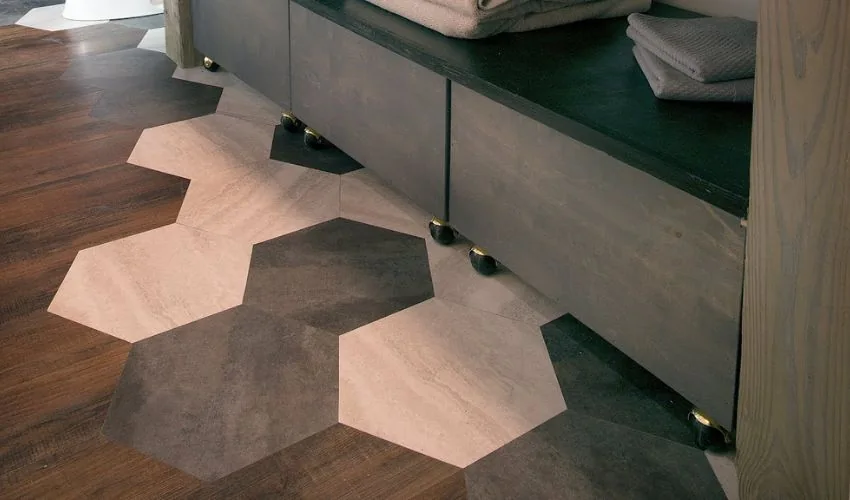
This category, frequently marketed as part of cheap vinyl flooring near me search results, is the one category worth actively avoiding for anything beyond a short-term rental fix, since the adhesive rarely holds up over glazed tile for more than a couple of years before edges begin lifting.
When Installing Over Tile Is the Right Call
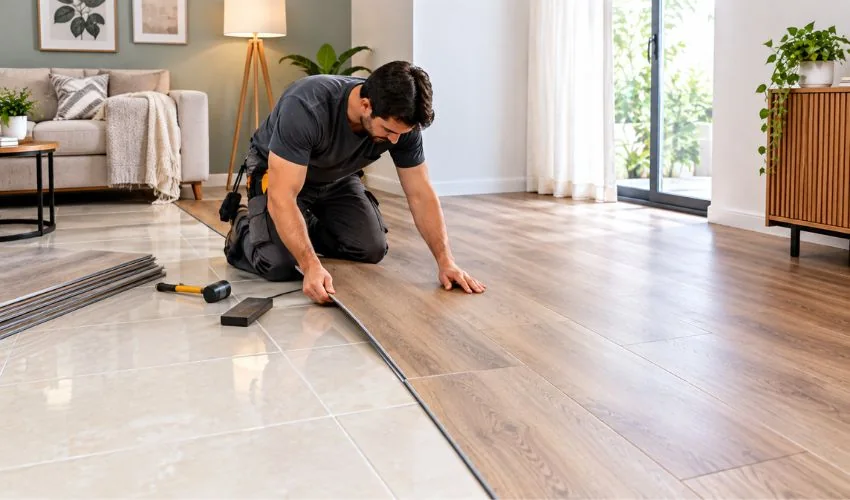
Overlaying makes genuine sense, and the reasons extend well beyond simply saving money, though that’s usually the first thing homeowners notice.
- Another advantage is its efficiency in working. A normal-sized room can be realistically finished in just a day’s work. As compared to the extra one or two days required to remove tiles completely, along with disposing of garbage from the site and cleaning up the concrete slab, it is an advantage to have the process done within such a short time.
- It’s quieter and considerably cleaner. There’s no jackhammering, no clouds of dust spreading through a shared apartment corridor, and none of the disputes with neighbours that demolition noise tends to invite, which is a real and practical consideration in many Dubai residential towers with strict building management rules around noisy work.
- It’s reversible in a way that full tile removal never is. A floating SPC floor lifts out plank by plank without damaging the tile underneath, preserving your options if you’re renting, if the property might be sold, or if styles simply change down the line.
- It costs meaningfully less overall. By doing away with all three steps – demolition, disposal, and slab repairs – most homeowners find themselves saving about one-third of what the overall cost of the project would otherwise be if they had to tear out the tiles before beginning.
- In addition, it actually makes living more comfortable too. Vinyl with an acoustic backing will provide a softer walk, reduce the harsh reverberation typical with bare tiles, and provide a warmer surface than any ceramic floor ever could.
When You Should NOT Install Vinyl Over Tile
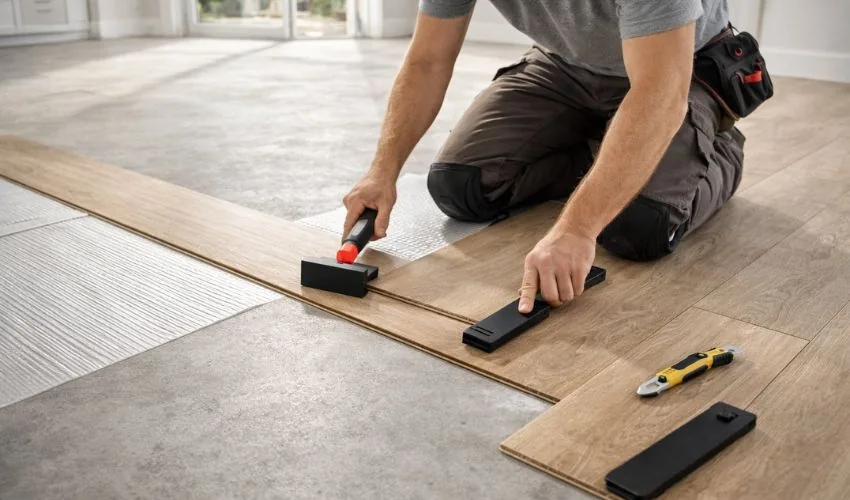
Be honest with yourself at this stage, because skipping an honest assessment here is where most flooring failures actually begin, regardless of how good the vinyl product itself might be.
-
- Widespread hollow or loose tiles. Tap-test the floor. If 20–30% or more sounds hollow, the tile bed itself is failing.
- Cracks running through several tiles in a line. This usually points to slab movement. Vinyl over the top hides the symptom, not the cause.
- Active moisture. A leaking pipe, rising damp, or a bathroom with failed waterproofing will trap moisture under the vinyl and make things worse.
- Height-critical spaces. If the added 5-8mm means doors won’t close or built-in appliances no longer fit, removal is the better path.
- Severely uneven tile. Heavy or deep unevenness may cost more to level than it would to simply remove.
Preparing UAE Tile for a Vinyl Overlay, Step by Step
- Fix loose and damaged tiles. Re-bond anything hollow, or remove and patch it flush with a cement-based filler. Empty voids under a floating floor cause flexing and clicking.
- Address grout lines. This is the step DIYers skip most, and the one that causes “ghost lines” to appear months later. Standard narrow grout joints under a 5mm+ rigid plank are usually fine; wider or worn joints need a thin skim coat of leveling compound.
- Level dips and high spots. Use a straightedge to find low areas; prime the tile. Leveling compound won’t bond to glazed tile without it; then pour self-leveling compound where needed.
- Clean thoroughly. Kitchens especially carry an invisible grease film. Degrease, rinse, and let the floor dry fully before laying anything.
- Manage the height change. Undercut door frames using an offcut of your new plank as a guide, check appliance clearance, and plan transition strips wherever floor levels change.
Vinyl Flooring Price in UAE: What to Realistically Expect
Pricing is the one thing almost every competitor guide skips entirely, and it’s usually the very first thing a homeowner actually wants to know before going any further. Even if the figures are subject to variations depending on the quality of the product, the thickness of the planks, and the surface preparation required by the type of tiles you wish to install, it can be useful to have some idea about the structure of the market first.
The budget or low-end version of the SPC tiles is positioned rather at the bottom of the market and constitutes a reasonable choice for rentals or a quick makeover where no long-term investment is planned.
The mid-range versions of both SPC and WPC tiles are positioned slightly higher but provide a significantly improved wear layer, more realistic look, and longevity than the budget ones. These constitute the best solution for most family villas and apartments.
The premium wood-look or commercial-grade vinyl occupies the upper position within the market and represents an appropriate choice for heavy-duty use or luxury interiors.
Choosing a Vinyl Flooring Company Dubai
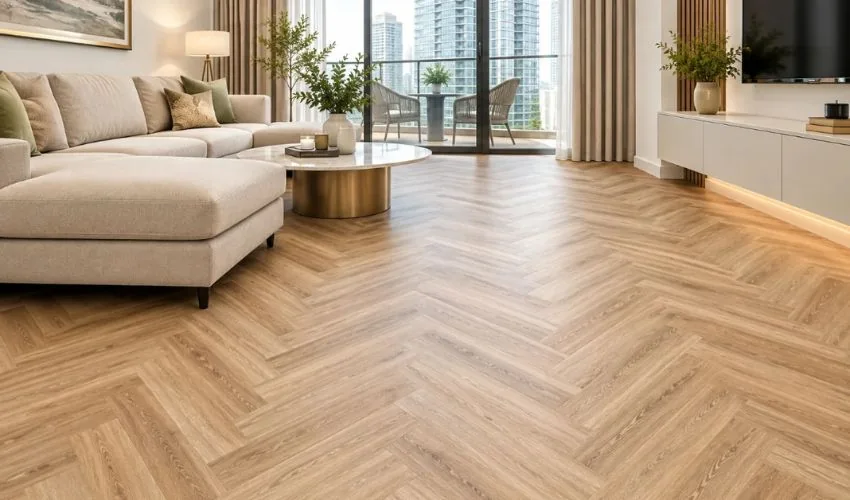
Looking up information on vinyl flooring online in Dubai will provide you with plenty of choices. However, keep in mind that choosing solely based on price may not always pay off because usually the cheapest quote is cheap. After all, it does not include the necessary preparatory steps for your floor to survive five years or twenty years from now.
- Make sure that the company you are dealing with has an actual place where it operates in the UAE and not simply a web-page with contact information but without a street address.
- Make sure that there are explicit warranty terms not only for the product but also for its installation.
- Make sure that the company does an estimate on-site before quoting their price because otherwise they basically make a guess and you will have to pay for it later.
- Check for a real portfolio with real customers’ feedback on actual vinyl flooring Sharjah or Dubai.
Common Mistakes to Avoid
- Skipping the moisture check, the single most expensive mistake homeowners make.
- Choosing planks thinner than 4mm over tile, which invites grout telegraphing.
- Doubling up underlayment on planks that already have an attached pad.
- Leaving no expansion gap, critical in the UAE given daily heat-to-AC temperature swings.
- Buying only the exact measured amount instead of adding 8-10% extra for cuts and future repairs.
Final Thoughts
For the vast majority of homes across Dubai and the wider UAE, installing vinyl directly over existing tile is genuinely the right call. We try to provide the pro guide for vinyl flooring Dubai. Get a stable, warmer, quieter, noticeably more comfortable floor underfoot, while keeping the option open to remove it later if your plans or tenancy situation ever changes.